
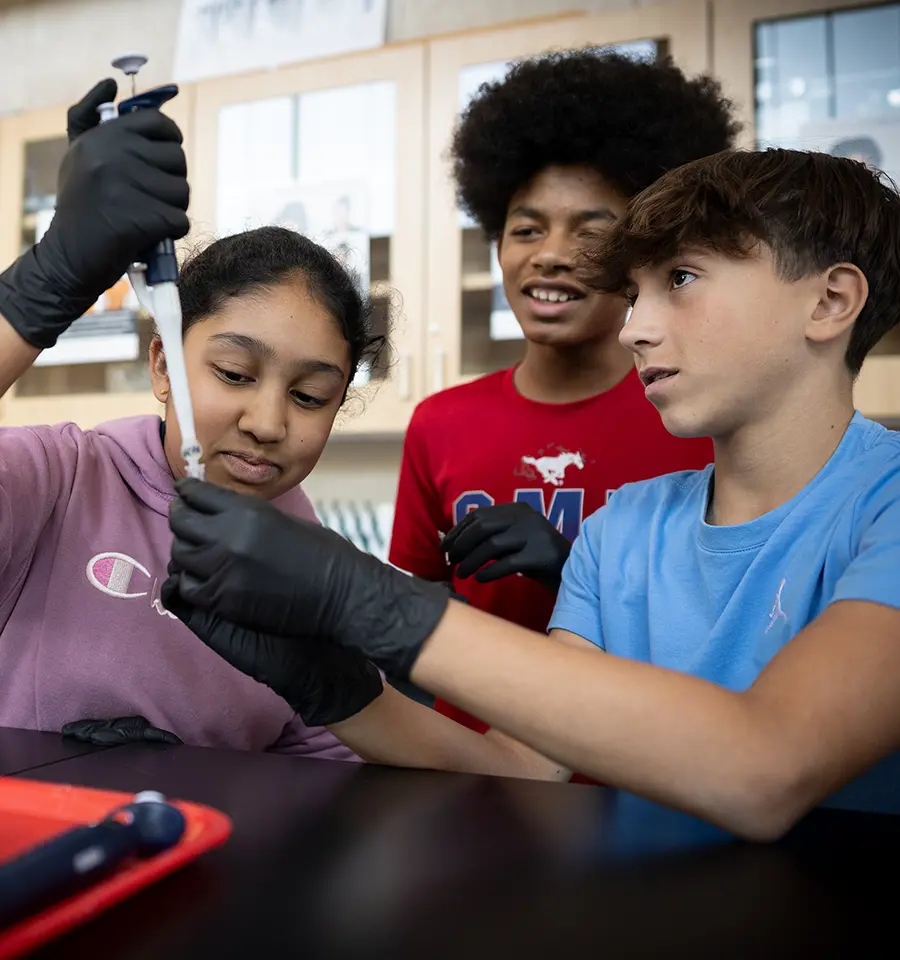
Evergreen Spotlight: Twice the Team: Greenhill Robotics Rises
The Upper School robotics team earned the Connect Award at its final match of the year. The following story was featured in the February issue of The Evergreen.
|
By: Khushi Punnam The award recognized the team with the most significant community outreach and commitment to learning from mentors, and was based on an initial presentation, an afternoon questioning session and a 15-page engineering portfolio documenting the season. |
|
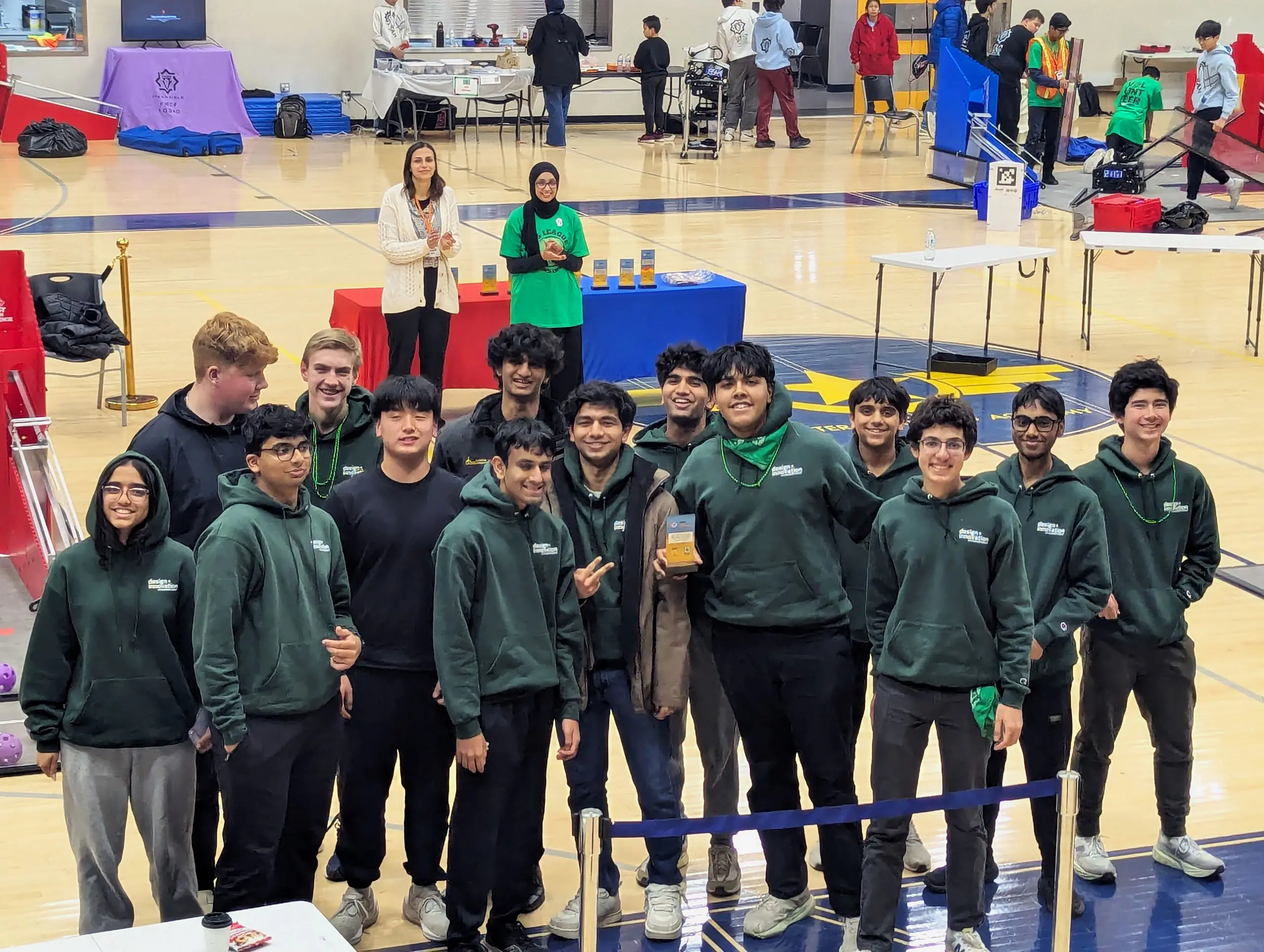
The top four of the 30 teams competing in the Garland tournament at the Brighter Horizons Academy advanced to the FiT-North Texas Regional Tournament. Greenhill finished 16th based on total points.
“I am very proud of how they did,” Upper School robotics teacher Joseph Meagher said of his team. “We won an award, which is not something we do every year, so even just the fact that we won an award was a really big achievement.”
Junior Johnny Sewak, a co-captain of the team, says this tournament was a valuable experience.
“Everyone came ready to do their best,” said Sewak.
Much of this year’s success can be attributed to the team doubling in size, which Meagher says brought new dynamics to the group.
“The team has benefited from new members’ energy and positive contributions to the room,” Meagher said. “While the team has not fully coalesced yet, the new kids are bringing in a lot of good technical and soft skills, and it’s been a pleasure for me to see.”
Preparation and Teamwork
Every September, students receive a new problem to solve as part of the For Inspiration and Recognition of Science and Technology Tech Challenge. This season, students were asked to build a robot that accomplishes various goals each match. One of those objectives is to mechanically throw artifacts – 6-inch wiffle balls – into baskets.
Greenhill’s first step was conceptualizing and deciding on a robot direction for the year. The increase of the team’s size from 12 to 24 members resulted in several outcomes, according to Meagher.
“More students meant more ideas, more perspectives and of course more disagreement,” Meagher said.
With more voices, the necessity for clear communication grew.
“If only one person knows everything, then when they’re gone, the rest of the team is helpless,” Sewak said.
In response to the influx of members, Meagher paired experienced students with those less familiar with robotics.
“The dynamics of the team changed a lot,” said junior Kiran Karthik, an experienced member of the team. “I was told to step back and act more as a mentor instead of a doer.”
While initially uncertain, Karthik says the adjustment was impactful.
“I have learned how to be more patient and communicate with less experienced members, which has transferred to other interactions outside of robotics,” said Karthik.
Meagher says his aspiration for the team was to ensure every student felt capable of contributing, technically and verbally.
“Robotics is about more than building,” Meagher said. “It’s about learning how to work with people, explain ideas and adapt when things don’t go as planned.”
Early on, that lesson became increasingly clear. Ideas were proposed, scrapped and reconstructed, sometimes repeatedly. Karthik says one of the most debated components was the robot’s shooter.
When it failed to perform early in the season, team members scrapped their original design entirely. After transitioning to a new design, they noticed that many competitors were still using a more efficient version of their original design.
“Other teams were using something really similar to the original design, and it seemed to be more effective,” Karthik said. “We decided to go back to it.”
Despite bouncing between ideas, Sewak says the team is now on an upward trajectory.
Between competing voices and setbacks, the team has learned to adapt and grow under pressure, much like the robot they built, according to Sewak.
“On the whole, we’ve had a lot of issues dealing with teamwork this year,” Sewak said. “But with this experience under our belt, next year we’ll come back stronger, with a more unified team ready to handle whatever technical challenges are thrown at us.”


